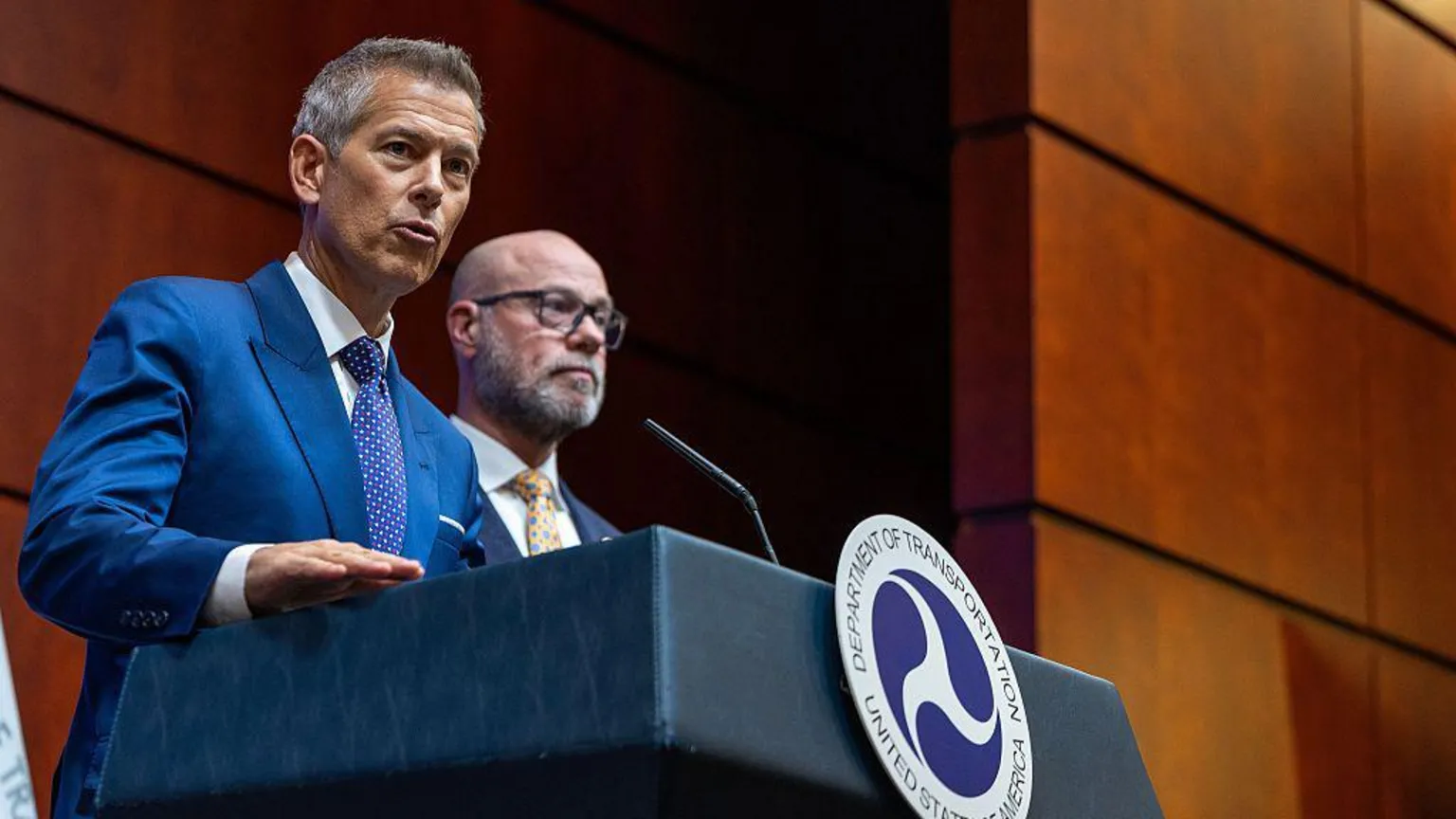
Transportation Secretary Sean Duffy has warned that the U.S. will begin reducing air travel capacity at 40 major airports starting Friday morning if the government shutdown remains unresolved — a move that could cancel up to 4,000 flights per day.
At a joint briefing on Wednesday, Federal Aviation Administration (FAA) Administrator Bryan Bedford said the decision follows increasing reports of fatigue among unpaid air traffic controllers, who have now been working over a month without pay.
“It is unusual — just as this shutdown is unusual, and the fact that our controllers haven’t been paid for a month is unusual,” Bedford said. “If we allow these pressures to go unchecked, we cannot honestly say we’re maintaining the safest air system in the world.”
According to officials, the flight reductions will be phased in gradually:
Friday: 4% of domestic flights cut
Saturday: 5%
Sunday: 6%
Next week: up to 10% overall
The list of affected airports — all major hubs — will be released Thursday, Bedford confirmed.
Duffy emphasized that air travel remains safe but said the temporary flight reductions are necessary to preserve that safety as the shutdown drags on. If funding isn’t restored soon, the FAA may impose additional restrictions.
Major airlines are bracing for disruption.
American Airlines said it expects “the vast majority” of customers won’t be affected but is awaiting further FAA guidance.
Southwest Airlines said it is assessing how the cuts will affect its schedule and urged Congress to “immediately resolve its impasse.”
Delta Airlines declined to comment.
The ongoing shutdown — now the longest in U.S. history — began on October 1, forcing thousands of federal workers to stay home without pay. Air traffic controllers, deemed essential, must continue working, prompting some to call out sick or take side jobs to cover expenses.
“Controllers are texting, ‘I don’t even have enough money to put gas in my car to come to work,’” said Nick Daniels, president of the air traffic controllers’ union. “We depend on predictability. Right now, there is none.”
Duffy has previously warned that about half of the country’s 30 busiest airports are experiencing staff shortages and cautioned that safety risks could increase if controllers continue working second jobs to make ends meet.